
Albanese's hate-speech legislation is dangerous. It cannot be fixed.
Stamping out hate-speech is a laudable goal. Yet, we can't achieve this with more legislation and police powers.

In the wake of the Bondi shooting in December, Anthony Albanese has recalled Parliament to debate and likely vote on a new bill to strengthen hate-speech protection (alongside restrictions on guns, which I wont discuss in this piece). A massive piece of legislation that has been very rushed, this law will have significant impacts on our rights to participate in genuine political debate and discussion. While some are talking about amendments to improve it, including expanding protections to other minority groups, the very basis of it is flawed. The whole thing needs to be thrown out.
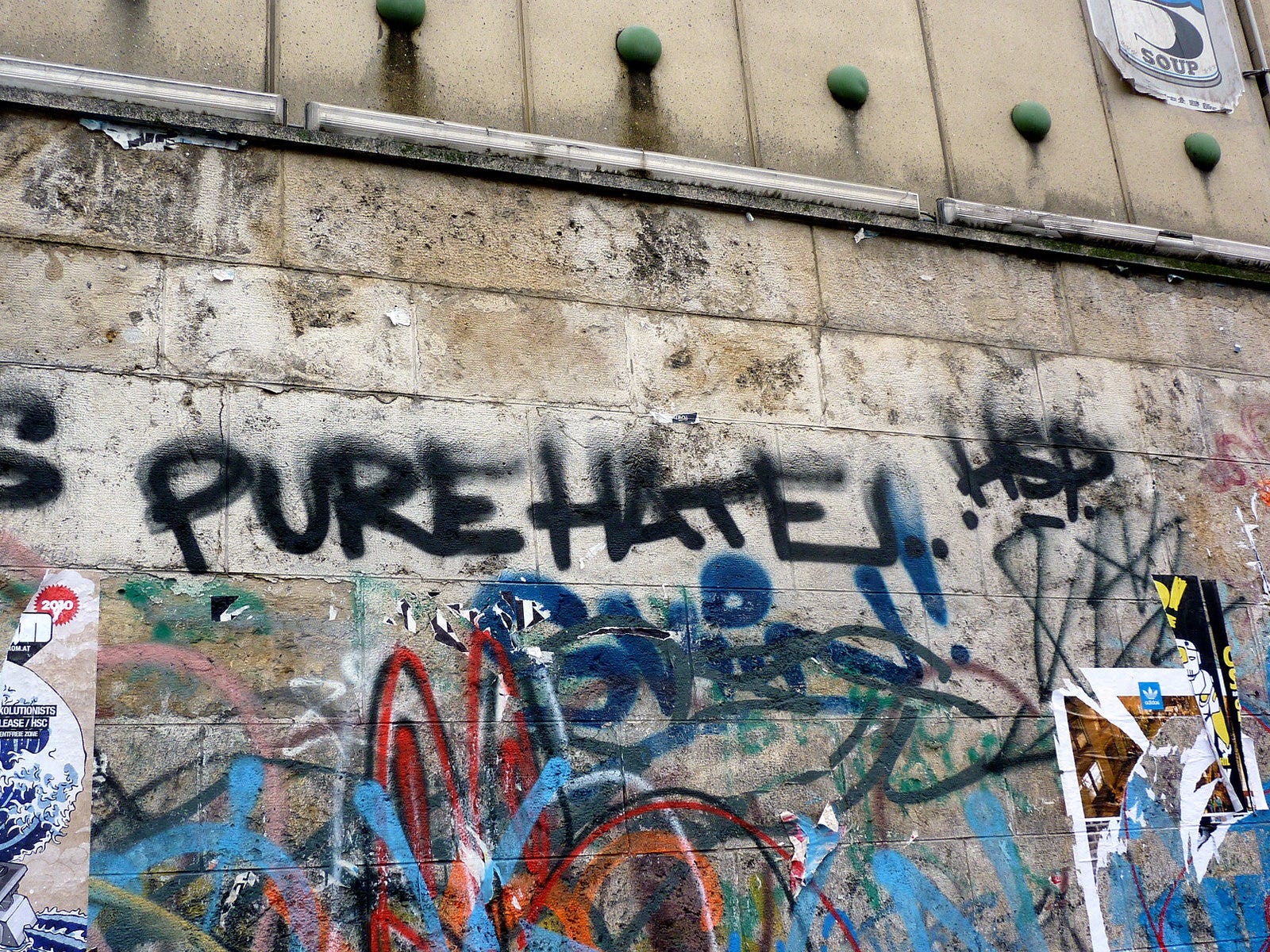
Image: https://www.flickr.com/photos/kami68k/4635915871
The legislation is vague and will seriously curtail free speech
There are two major components of the proposed legislation - new laws to criminalise hate-speech, and powers for the Government to ban hate groups.
The legislation will criminalise any conduct that will “promote or incite hatred of another person (the target), or a group of persons (the target group), because of the race, colour or national or ethnic origin of the target or target group”. This conduct is not just about words, but also includes “...actions and gestures and the wearing or display of clothing, signs, flags, emblems and insignia.” Anyone who incites or promotes such racial hatred, or disseminates “ideas of racial superiority”, will be liable for five years in prison.
The problem comes in defining such hatred, with the bill full of broad definitions that will be used to curb genuine debate. Specifically, the legislation says that people can be found to have committed a criminal act if a court determines that a “reasonable person” within a “targeted group” felt that alleged conduct could cause anyone to “humiliate” or “harrass” them. This is called the ‘reasonable person’ test, and is used a lot in law. But in this case, no one actually needs to have been intimidated or harassed for the offence to be triggered - the court just needs to decide whether that could happen.
To give a real-life example, what this means is that a court could, and likely would, rule that any criticism of the Israeli state is defined as inciting others to harass Jewish people. They would have to do so not because of any intention of hatred, but rather because a “reasonable person” (however that is defined) within the “target group” feels that this speech is likely to result in humiliation and harassment. Given how many Zionists have publicly claimed that any critique of Israel equals hatred against all Jewish people, this claim will clearly be made, and in turn, the legislation will likely result in criticism of Israel being criminalised.
In addition, the legislation also gives the Government broad powers to ‘list’ groups that it claims are involved in or advocates hate crimes, which would result in that group being banned. If a group is listed, it then becomes illegal to be a member of that group or to support it, with up to 15 years imprisonment. Under the laws, no one needs to be convicted of a hate crime for the minister to be satisfied that an organisation has engaged in conduct constituting a hate crime and there is no requirement for the minister to observe procedural fairness. The Minister would simply make a recommendation to the Governor General who would then declare a group to be prohibited.
Again, this gives the Government huge broad powers to define hate, giving them unprecedented powers to abolish any group they see fit. As Anne Twomey has pointed out, Australia has a sordid history of banning genuine political organisations, one we must be very wary of repeating. We have recently seen the consequences of such decisions, with UK Government using terrorism legislation to ban the group ‘Palestine Action’ (although this was voted on by the Parliament). The result has been peaceful protesters being arrested under anti-terror legislation for holding signs opposing genocide, while those promoting genocide have faced no consequences. This legislation could easily result in the same happening here.
UPDATE: I have made a few mistakes in this section re some of the specific details of the legislation. Reading legislation is not my strongest suit! Instead of changing the text, go and read the comment from Jeremy below.
I don’t trust the state to define hate speech
These issues cannot be fixed through amendments or drafting changes. They certainly cannot be fixed by expanding the legislation to cover other minority groups.
While I’d love to see an end to hate speech, the reality is that it is impossible to define, and therefore near-impossible to legislate against. Someone else’s hate is often another person’s genuine political engagement. And while we need, and must, have real discussions about what hate is, the impact of it, and how we stamp it out, we cannot trust the state to be making those decisions for us.
The Israel-Palestine debate is the perfect example of this. I, and many millions of others, consider critique of Israel, its genocide, and of zionism to be genuine political speech. However, many others claim this is hate-speech. Over the past couple of years, as Israel has committed its genocide, global leaders have shown where they stand in this debate, defending those who are upset at being called out for committing or supporting a genocide, while routinely punishing others who are calling out this crime. When governments try to be the legal arbiters of such a debate, they always end up favouring the powerful and those who support their interests.
This is not just about the Israeli genocide. These dynamics will play out across a range of issues, and there is no way out of this. While I understand the inclination to want to do something to stop hate in Australia, particularly in the context of the Bondi Attacks, this is simply not the right way to do it. Government attempts to curtail speech and to ban particular groups will always result in the further oppression of those engaging in genuine political speech.
To stop hate we need investment in community, not new laws
We should want to stop hate in our community.
But in rushing new laws, the Albanese Government has shown they have no real interest in ending hate-speech. Instead they are lumping us with a dangerous band-aid, one that is a political win, but will cause severe problems. Increasing the power of the state, and particularly of police, will lead to greater oppression and for those on the fringes to feel more isolated and frustrated, potentially pushing them further into hateful communities.
To stop hate means giving up on the band-aid approaches. Instead, we need to invest in community - funding social services, building community to create connection, and investing so people have a real sense of security and meaning in their lives. The problem with this is that it takes time and money and does not grab headlines like new legislation. It also does not suit the needs of any current Government, who prefer giving themselves new powers over creating real community. So instead, we get bad laws and bad ideas that deserve to be in the dustbin of history.
Hi Simon, I agree with much of what you say here, and specifically that criminalising hate/vilification is a bad idea. That being said, I don't think you're correctly reading this (admittedly very cumbersome and hard-to-read) legislation, specifically the proposed new vilification offence.
I don't think 'hatred' is defined at all in the new offence (though the explanatory memorandum says a bit about it). The 'reasonable person' bit you focus on isn't a definition of 'hatred'; rather, it is an added thing the prosecution has to prove (i.e. in addition to proving an intent to 'promote or incite' hatred or disseminate ideas on racial superiority.) And you've also misquoted that bit in several ways: it requires that the conduct 'would' (not 'could') cause a reasonable person to be intimidated or fear harassment or violence or for their safety. And the targeted group is defined by race etc, not by 'zionism', and is specifically about 'reasonable' members of that group, not a majority or many of that group or the like.
So, in the example you give about someone criticising Israel, the prosecution would have to prove that the critic intended to promote or incite hatred of a group because they are Jews (not because they are Zionists) and also that 'reasonable Jews' (not 'many Zionists') 'would' (not could') be intimidated or fear harassment or violence or for their safety. That's still a bad test I think, but these details leave me less convinced than you that the legislation 'will likely result in criticism of Israel being criminalised,' (As well, there's also the good faith defence in 80.3 to consider.)
I realise this all sounds finicky, but these distinctions would all likely be key if someone was prosecuted for criticising Israel (or the legislation was challenged in the High Court.)
Cheers,
Jeremy